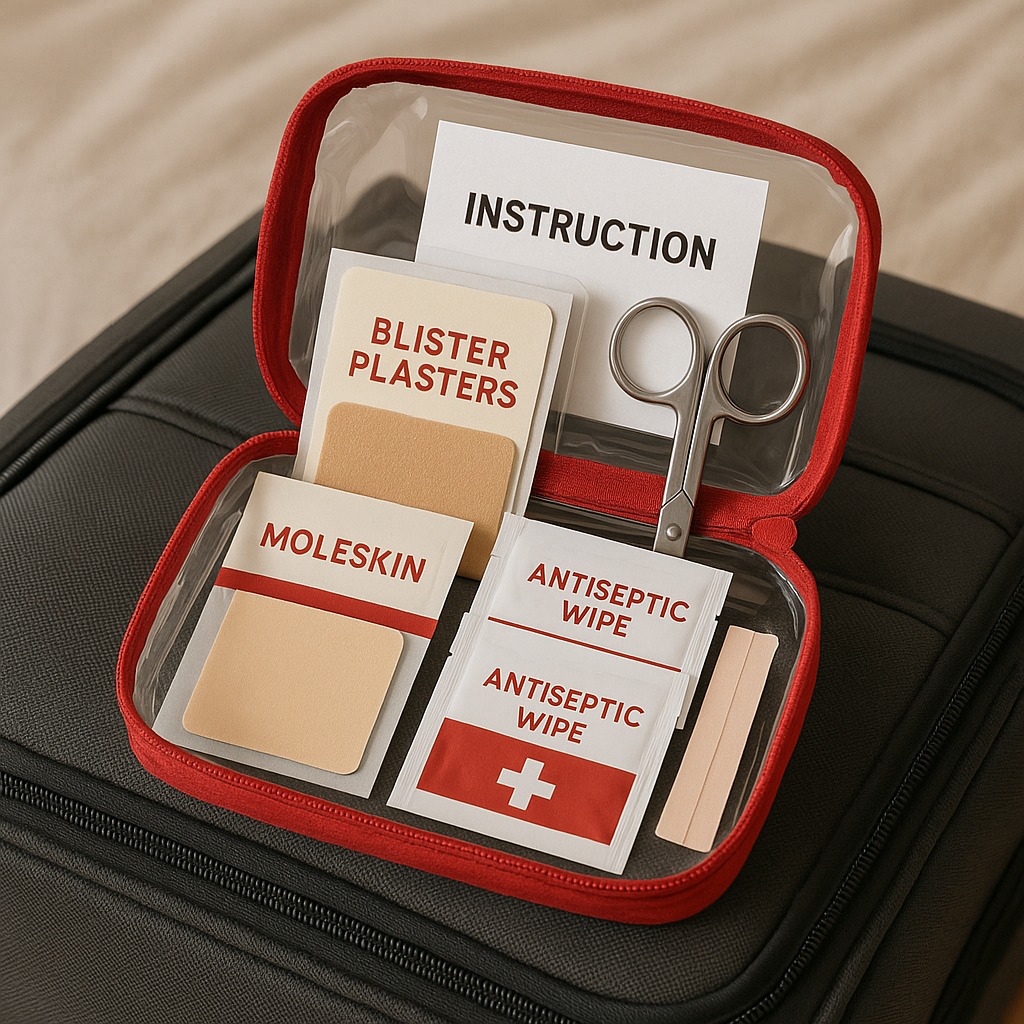
Why a blister-focused first aid kit belongs in checked luggage
A compact, well-organized first aid kit in checked luggage protects feet and prevents small wounds from becoming travel problems. Blisters, minor cuts, and abrasions are among the most common travel injuries—especially during hiking, long walking days, or when wearing new footwear.
Checked luggage is often the right place for slightly larger or liquid items that exceed carry-on limits, but careful packing and labeling are essential to keep supplies dry, accessible after baggage claim, and compliant with airline rules.

Security and airline considerations before packing
Verify airline and country regulations before packing. Liquid ointments and gels placed in carry-on luggage are usually limited by volume restrictions (for example, 100 ml/3.4 oz in many jurisdictions), so placing larger antiseptic creams or spray bottles in checked luggage can be practical. Some items—sharp objects or pressurized containers—may be restricted or require special packing.
Prescription medications and essential oral medications should stay in carry-on baggage to ensure access during a flight or a baggage delay. For non-essential but helpful items (extra dressings, larger antiseptic bottles), the checked bag is appropriate. Always keep receipts and prescription labels with medications to avoid questions at customs.
The Real Cost of a Blister: When DIY First Aid Fails
As a professional travel advisor, we know how a minor medical issue like a blister can turn into a loss of thousands of dollars. Getting an infection on vacation can cost you thousands and more importantly cause you to miss out on your trip. Purchasing a $20 first aid kit should be looked at as a vacation investment. Like any good mechanic, having all the proper tools will make for light work. Having everything you need to treat a blister and keep it clean could save you $10,000!

Essential blister-care items to include
Prioritize items that protect the skin, reduce friction, absorb moisture, and promote healing. The following list provides core blister-care essentials suitable for checked luggage:
- Hydrocolloid blister plasters (several sizes) — cushions and promotes fluid reabsorption
- Moleskin sheets — cut to shape to prevent friction hotspots
- Athletic tape or medical adhesive tape — secures dressings and protects toes/heels
- Thin sterile adhesive bandages (various sizes) — for small blisters and cuts
- Sterile gauze pads and non-stick dressings — for larger blistered areas
- Antiseptic wipes and single-use alcohol prep pads — reduce infection risk

Items for minor cuts, abrasions, and wound care
For small cuts and scraped skin, include basic wound-cleaning and protection supplies. These items handle common travel scenarios from a scraped knee while on your cruise excursions or blisters from running around the theme parks:
- Antiseptic solution or ointment in travel-safe containers (double-bagged to prevent leaks)
- Sterile adhesive strips and butterfly closures for small lacerations
- Latex-free disposable gloves (2–4 pairs) to maintain sterile technique
- Small pair of blunt-tipped medical scissors and tweezers (package securely to prevent damage)
- Pain relievers (non-prescription analgesics) stored in original packaging or clearly labeled
Packing method: keep everything sealed, organized, and cushioned
Choose a durable, waterproof pouch or small hard case for checked-luggage storage. Place liquid or semi-liquid items (ointment tubes, antiseptic bottles) inside zip-top plastic bags and then into the main kit pouch to contain leaks. Wrap sharp items like scissors and tweezers in cloth or a sheath to avoid puncturing clothing or the pouch.
Position the kit in the center of the suitcase, surrounded by clothing, to reduce crushing. Include a printed, laminated one-page instruction card: basic steps for blister treatment, when to drain a blister (if at all), and when to seek medical care. Also add a small inventory checklist to make restocking after travel easy. Don’t forget to visit our “What to Pack for a 7 Day Cruise Guide” to give you more insight to what you will need.

Quantities and recommended sizing for checked-luggage kits
For a typical 1–2 week trip, suggested quantities help balance preparedness with weight and space:
- Hydrocolloid plasters: 8–12 patches in mixed sizes
- Moleskin: 1 small sheet that can be cut to shape
- Athletic tape: one 1-inch roll
- Sterile gauze: 6–8 pads (various sizes)
- Antiseptic wipes: 8–12 individually wrapped packets
- Ointment tube (15–30 ml) double-bagged
- Disposable gloves: 2–4 pairs
- Scissors and tweezers: one compact set packaged securely
How to treat blisters, cuts, and abrasions while traveling
For intact blisters: clean the area with an antiseptic wipe, leave the blister intact if possible, and apply a hydrocolloid plaster or padded dressing to cushion and protect. For painful blisters in pressure points, moleskin shaped with a donut hole can offload pressure around the blister.
For large or open blisters and minor cuts: gently clean with antiseptic, apply a sterile dressing, and secure with tape. If drainage is necessary because a blister is extremely painful or likely to tear, use sterile technique—clean the skin, use a sterile needle to puncture the edge, express fluid gently, apply antiseptic, and cover with a hydrocolloid or sterile dressing. If signs of infection appear (increasing redness, warmth, pus, spreading streaks, fever), seek medical care promptly.
Special considerations: hiking, beach trips, and long flights
Hiking, cruise excursions and outdoor trips require extra blister prevention items: additional moleskin, toe caps or gel sleeves, moisture-wicking socks, and an extra blister-plaster supply. For beach trips, include waterproof dressings and extra antiseptic wipes due to sand contamination risk.
On long flights, foot swelling and tight shoes can increase blister risk. Keep a spare pair of comfortable shoes in checked luggage if possible, and pack preventive items such as thin adhesive bandages and hydrocolloid patches for use upon landing. Remember that necessary immediate-use medications should be in carry-on luggage instead.
Maintenance: replenishing supplies and checking expirations
After each trip, inspect the kit for used or expired items and restock promptly. Replace opened antiseptic solutions or ointments past the shelf-life, refresh adhesive tapes and plasters if they have lost tackiness, and wash or replace the storage pouch if contaminated. Keep a running restock checklist and purchase travel-sized replacements to keep the kit compact. Check out the First Time Cruisers Guide which has some tips, tricks and packing hacks for when it is time to put it all together.
Travel Insurance vs. The First Aid Kit:
Protecting Your Investment
A first aid kit covers small cuts and blisters. Travel Insurance covers the rest. When planning a cruise or all-inclusive trip, a simple blister that gets infected (as noted in the FAQ) could mean a visit to a foreign hospital. Your insurance, which we can seamlessly arrange, covers emergency medical treatment, evacuation, and trip interruption if a serious injury forces you to cut your vacation short. Never mistake the protection of your feet for the protection of your wallet. I recommend that all my clients purchase travel insurance when making any travel plans and that is why i am proud to offer CHUBB and Allianz to my clients. They are both great companies, with great coverage.
Short Form FAQ
Are blister plasters allowed in checked luggage? Yes—hydrocolloid plasters and most dressings are allowed in checked luggage, but check airline rules for any specific restrictions.
Can scissors and tweezers go in checked bags? Small scissors and tweezers are generally allowed in checked luggage but should be secured to avoid damage. For carry-on, rules vary by country—confirm before travel.
What if I think my blisters are infected? Without a doubt the first thing to do in this situation is go to the medical room on a cruise or the nearest clinic/emergency room. Infections can cause some serious damage and can land you in the hospitals for months. If you are unsure, play it safe and get checked.
Ready to book your dream trip?