We have all been there. You are three days into your dream Mediterranean cruise or hiking through a national park, and you feel that familiar, hot sting on your heel. It starts small, but by dinner, you are limping. By the next morning, you are looking at a $200 bill just to see the ship doctor for a single bandage and some antiseptic.
As a travel advisor, I look at a First Aid Kit for Blisters as a vacation insurance policy. If a mechanic would not show up to a job without their tools, you should not show up to a 10 mile walking tour without yours. A minor infection in a foreign country can easily turn into a $10,000 medical nightmare. Treating a blister properly and keeping it clean is not just about comfort. It is about protecting your entire vacation budget.
The Checked Luggage Strategy: What Goes Where?
There is a common mistake travelers make: they put everything in their carry-on. While you should always keep your prescription meds and must-haves in your hand luggage, the heavy hitters of your First Aid Kit for Blisters belong in your checked bag.
Large bottles of antiseptic, sharp medical scissors, and specialized gels often trigger security alarms. By packing your main First Aid Kit for Blisters in your checked luggage, you can carry larger quantities and more effective tools without the TSA headache. Just make sure to double-bag anything liquid. There is nothing worse than arriving at your destination only to find your evening wear covered in antiseptic cream.
The Time My Kit Saved the Day
I remember making a rookie mistake when first visiting Labadee on a Royal Caribbean cruise. I threw on a pair of flip flops and walked off the ship without a care in the world. I never thought about the fact that walking in flip flops with wet feet was going to cause an issue.
It did, and lucky for me, my grandmother had a First Aid Kit for Blisters packed with everything I needed to clean, protect, and cover the mess I made of my feet. I was able to keep the blister clean and avoid the medical bay, but it was an uncomfortable few days. Now, I tell my clients that a $20 kit should be viewed as a vacation investment. Having the proper tools makes for light work.

Exactly What to Pack: Quantities and Sizing
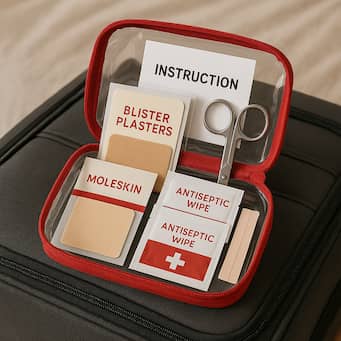
For a typical one to two week trip, you need to balance being prepared with the weight of your suitcase. You do not need the whole pharmacy, but you do need enough to last a few days of heavy walking.Here is the breakdown for a solid First Aid Kit for Blisters:
- Hydrocolloid plasters: 8 to 12 patches in mixed sizes.
- Moleskin: 1 small sheet that can be cut to shape.
- Athletic tape: One 1-inch roll.
- Sterile gauze: 6 to 8 pads in various sizes.
- Antiseptic wipes: 8 to 12 individually wrapped packets.
- Ointment tube: One 15 to 30 ml tube, double-bagged.
- Disposable gloves: 2 to 4 pairs.
- Scissors and tweezers: One compact set packaged securely.

How to Treat Blisters and Cuts Like a Pro
If you find yourself in your cabin or hotel room with an injury, do not just slap a bandage on it and hope for the best. Following recommendations from WebMD you can use the following guide:
For intact blisters:
Clean the area with an antiseptic wipe first. Leave the blister intact if you can because that skin is a natural barrier. Apply a hydrocolloid plaster to cushion the area. If it is in a high-pressure spot like your heel, cut a “donut hole” out of a piece of moleskin and place it around the blister to offload the pressure.
For open blisters or cuts:
Gently clean with antiseptic and apply a sterile dressing secured with tape. If a blister is so painful you absolutely must drain it, use a sterile needle to puncture the very edge. Express the fluid gently, apply antiseptic, and cover it immediately.
Special Considerations for Excursions and Long Flights
Different trips require different defenses. If you are headed for a beach trip, you need waterproof dressings and extra wipes because sand is an infection magnet. For hikers or those hitting theme parks, you might want to add toe caps or moisture-wicking socks to your kit.
Do not forget the flight itself. On long flights, your feet swell and shoes get tight. This is where those first blisters often start. I recommend keeping a spare pair of comfortable shoes in your checked luggage and having a few adhesive bandages in your carry-on for use as soon as you land
Travel Insurance vs. The First Aid Kit
A first aid kit covers small cuts and blisters, but travel insurance covers the rest. When you are planning a cruise or an all-inclusive trip, a simple blister that gets infected could mean a visit to a foreign hospital.
I recommend that all my clients purchase travel insurance from companies like CHUBB or Allianz. These plans cover emergency medical treatment and trip interruptions if a serious injury forces you to cut your vacation short. Your kit protects your feet, but your insurance protects your wallet.
Maintenance: Don’t Let Your Supplies Expire
The biggest mistake is setting and forgetting your kit. After every trip, my wife and I do an inventory. We check the expiration dates on ointments and see if the tape is still sticky. We rotate out the old supplies and replace them with new ones so we are never standing in a foreign city with a dried-out bandage.

Short Form FAQ
Are blister plasters allowed in checked luggage?
Yes—hydrocolloid plasters and most dressings are allowed in checked luggage, but check airline rules for any specific restrictions.
Can scissors and tweezers go in checked bags?
Small scissors and tweezers are generally allowed in checked luggage but should be secured to avoid damage. For carry-on, rules vary by country—confirm before travel.
What if I think my blisters are infected?
Without a doubt the first thing to do in this situation is go to the medical room on a cruise or the nearest clinic/emergency room. Infections can cause some serious damage and can land you in the hospitals for months. If you are unsure, play it safe and get checked.
Ready to book your dream trip?